Beginner's guide to identifying common design motifs
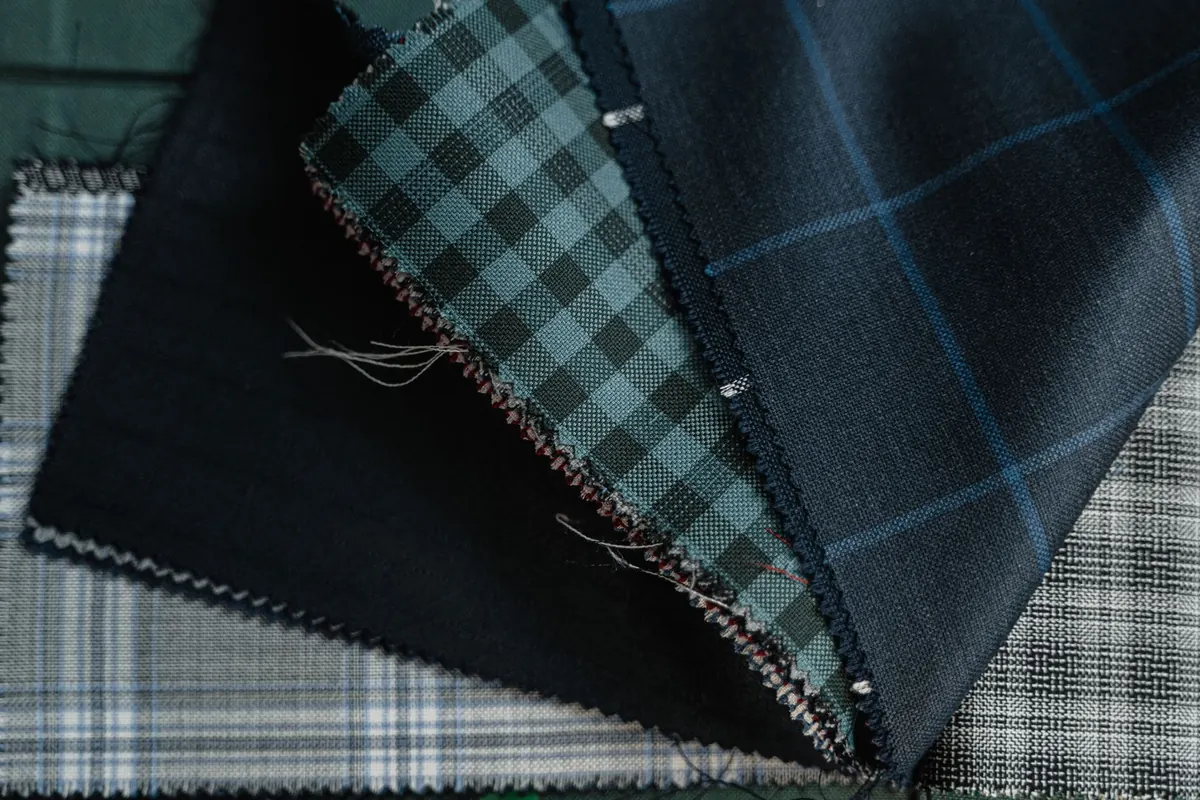
Pick up a cushion, a teacup, a floor tile or a paperback cover and something decorative is usually looking back at you. Most of it belongs to a surprisingly small set of families: florals, geometrics, animals, abstracts. Learning to tell them apart is less about memorising names than about knowing where to look — the shape of one motif, the way it repeats, and the marks left by the material it sits on.
Almost every motif is a variation on four groups. Florals and botanicals are built from plant forms: petals, leaves, stems, seed heads. Geometrics are built from lines and repeated shapes, and they obey a strict structure. Animals and creatures run from a woven hare to a heraldic lion. Abstracts cover the rest — marks, washes, textures and stylised shapes that reference nothing in particular.
Plenty of motifs sit in two families at once, which is useful rather than confusing. The paisley cone began as a botanical shape, but it is mirrored and repeated with such regularity that you can analyse it like a geometric. Notice the overlap, then decide which family dominates — that is the answer you would give someone.
Florals are the easiest family to enter and one of the trickiest to pin down, because the difference between two floral patterns is usually drawing style rather than subject. Ask whether the flower is specific or general. A study of a named species — a thistle, a lily, a peony — has uneven, lifelike detail, with leaves that twist and petals set at different angles. A generalised flower is symmetrical and flattened, which is exactly what makes it repeatable. The cabbage rose, the acanthus leaf and the stylised tulip are all generalised in this way.
Density and layout come next. A damask shows one motif on a reversible, usually woven ground. A chintz is densely flowered and often glazed. A toile is a single-colour scenic print where foliage shares space with figures and buildings. In hand block-printed cloth the colours often sit very slightly out of register where the blocks were placed by hand.
Geometrics reward patience, because here the structure is the identification. Find the smallest unit that repeats, then work out how those units stack.
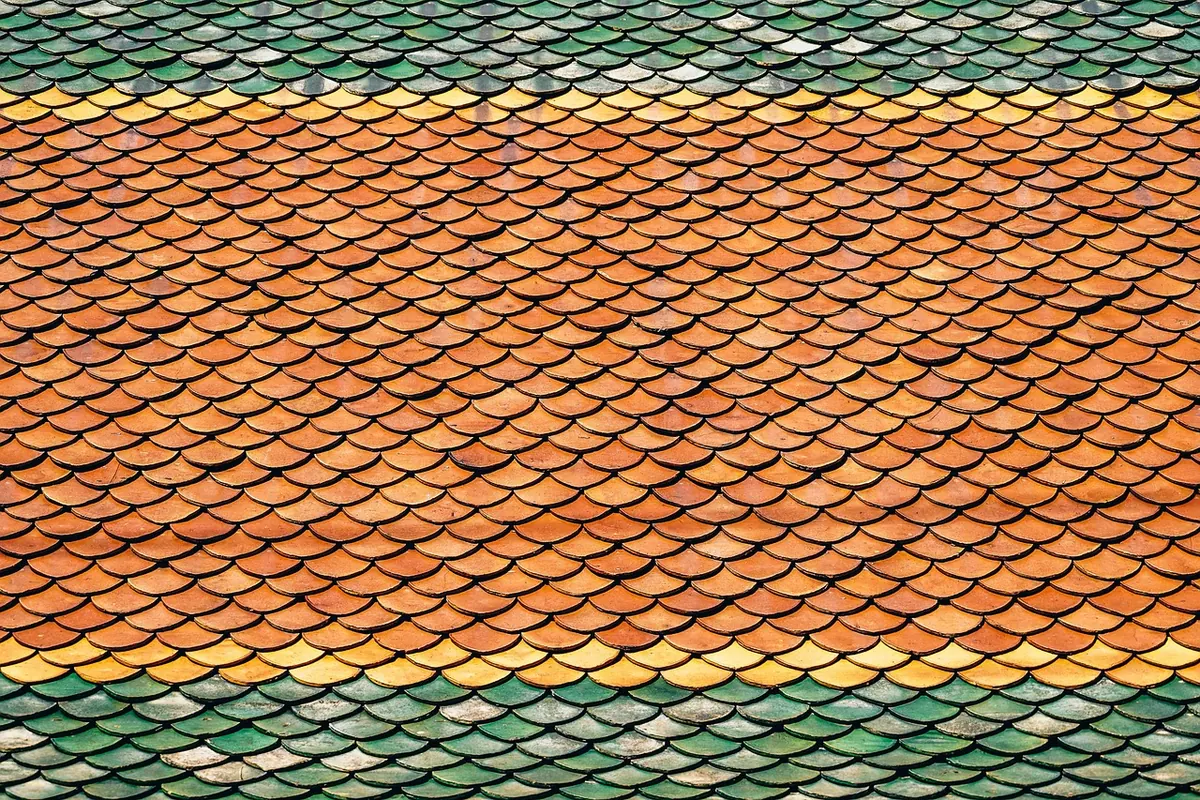
Names worth knowing: herringbone (rectangles at opposing angles), houndstooth (a broken check reading as jagged teeth), chevron (a continuous zigzag), Greek key (a meandering line that turns back on itself), ogee (a curve with a point, like a stretched onion), seigaiha (overlapping waves), trellis and honeycomb. Chevron and herringbone catch people out constantly: chevron pieces meet at a point, herringbone pieces meet at a right angle and are offset.
Animals carry meaning as well as decoration, so they are often drawn in a pose rather than as a portrait. Heraldic creatures — lions rampant, eagles displayed — are stiff, symmetrical and face outward. Processional animals, such as cranes or deer, walk in a line as part of a larger scene. Naturalistic animals are observed: a hare mid-leap, a butterfly with uneven wings.
The setting helps too. Animals inside a medallion or cartouche usually come from a woven or embroidered tradition — suzani, jacquard, crewelwork. Animals inside a landscape usually come from print or ceramic traditions, such as blue-and-white tableware. And some animal patterns are not animals at all: leopard print and zebra stripe are textures borrowed from fur and hide, arranged as an all-over repeat.
This is the honest "not sure" pile, and a good place to be. Abstract motifs are defined by process rather than subject — the mark records how it was made. Marbling shows combed swirls and veins. Ikat shows feathered, slightly blurred edges where threads were resist-dyed before weaving. Terrazzo shows irregular chips suspended in a ground. Brush-painted patterns show varying pressure and small gaps where the paint ran out. If a motif has no clear outline, no symmetry and no recognisable subject, ask what made the mark rather than what the mark depicts. That question usually answers itself within seconds.
A motif rarely looks identical when it moves between surfaces, and those differences are your best clue to how something was made.
Practise on things you already own. A striped shirt, a patterned mug, a cushion cover and a tiled splashback will give you several renderings of two or three motif families in under a minute.
Use this sequence whenever you meet a pattern you cannot name.
Then go looking on purpose. Kitchen tiles, tea towels, knitwear, endpapers in old books, café crockery and the pavement under your feet all carry motifs, and most cost nothing to study. Keep a phone album or a notebook and add one example a week, sorted by family. Naming the family and describing the repeat will carry you through most conversations about pattern, and the historical labels will attach themselves over time. If you are identifying a motif for a restoration, a valuation or a purchase, a specialist dealer or conservator is worth consulting — weave, print method and wear are far easier to judge in the hand than on a screen.
Photo: Tima Miroshnichenko / Pexels